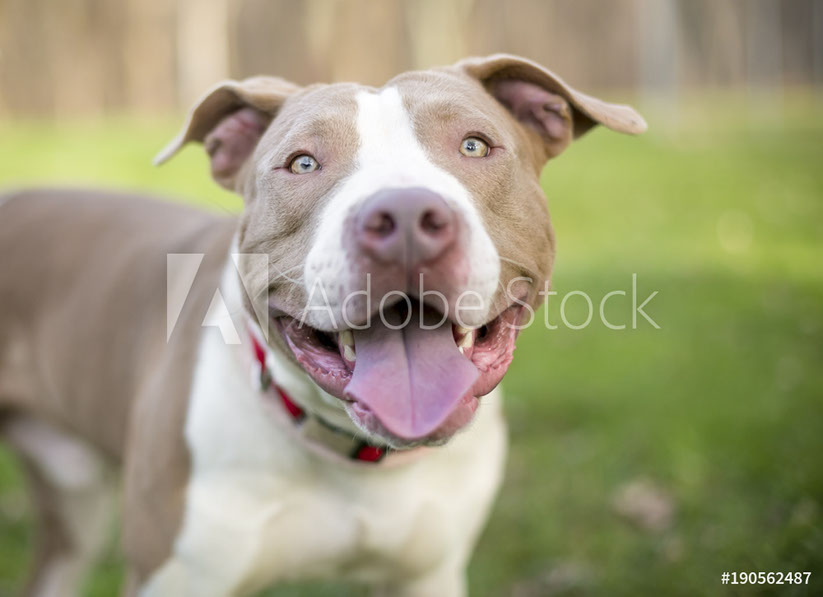
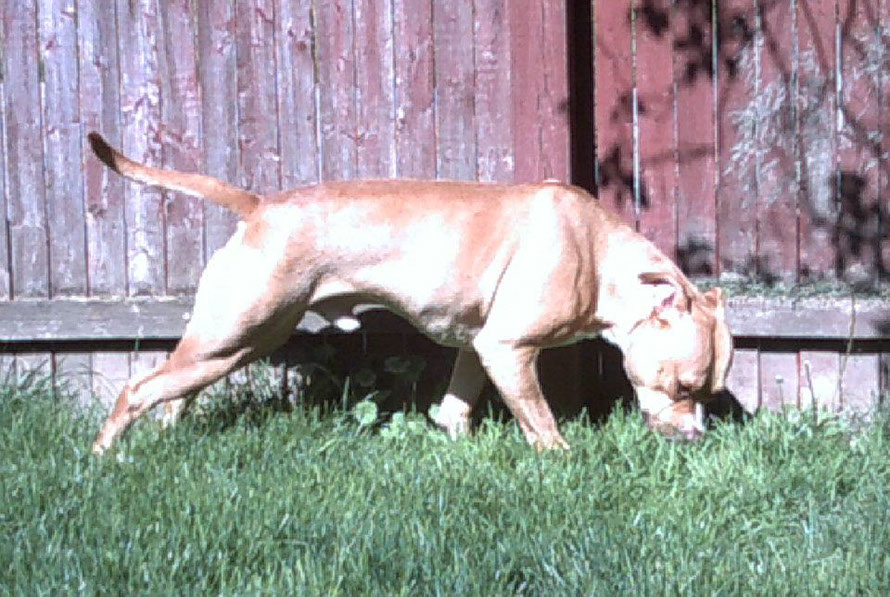
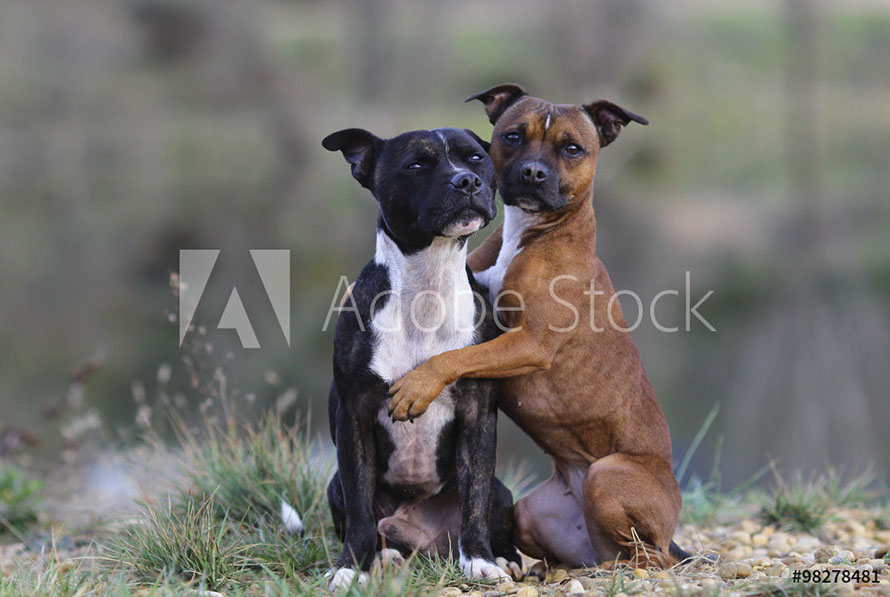
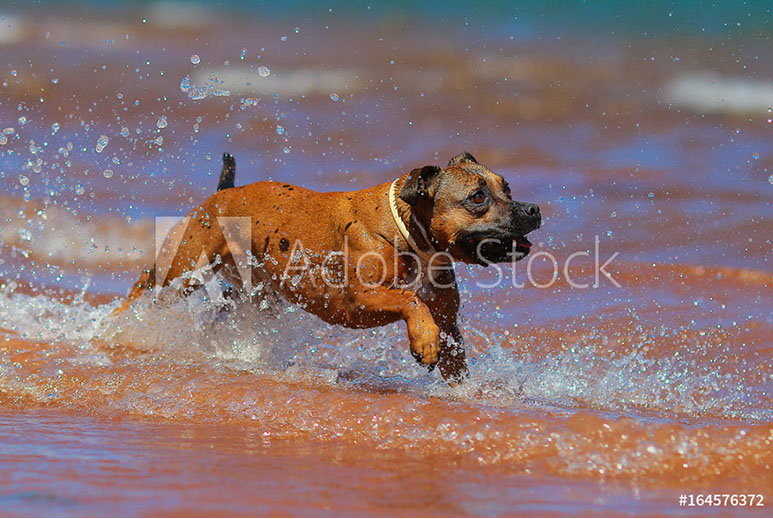
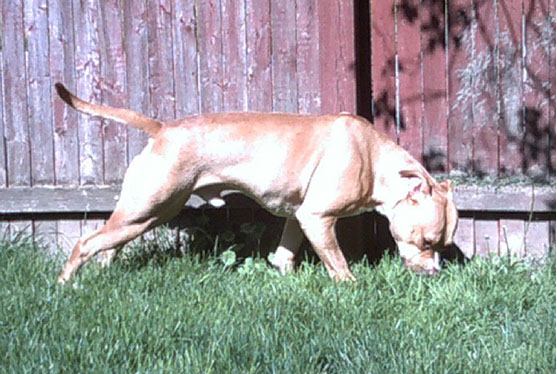
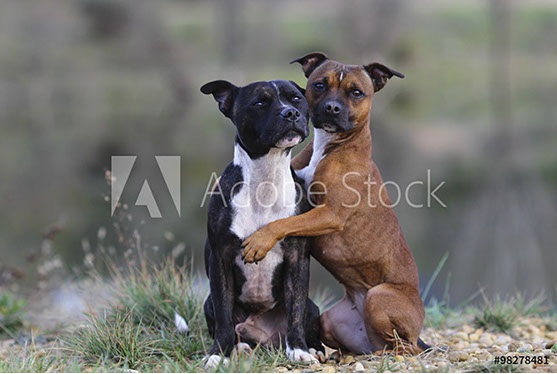
Reputation and Assumptions  Their jaws don't lock: The Journal of Veterinary Dentistry busted this myth earlier this year, but Veterinarians all over the country have been in agreement for many years that the jaws of "pit bull type dogs” do not lock. According to Dr. I. Lehr Brisbin of the University of Georgia, no dogs' jaws lock. He also stated, "We found that the American Pit Bull Terriers did not have any unique mechanism that would allow these dogs to lock their jaws. There were no mechanical or morphological differences." They don't have a higher pain tolerance: While having a higher pain tolerance can sometimes be used in a positive manner, it's not true. Our friends at Animal Farm Foundation said it best, "There is nothing unique about the neurological system of a 'pit bull' dog. All dogs, regardless of how they look or their genetic heritage, experience pain. How each individual dog responds to that pain will vary, but you cannot predict that response based on the dog’s physical appearance or heritage." They do not suddenly "snap": Any dog who suddenly attacks a human or animal without warning or reason is experiencing something painful—be it neurological or medical. It is not normal for any breed of dog (or human, for that matter) to suddenly snap without reason. And the same goes with a "pit bull type dog." They are not more prone to aggression: "Pit bull type dogs" are not more dog or human aggressive when compared with other breeds. In fact, the majority of "pit bull type dogs" make wonderful family pets. The American Temperament Test shows that the American Pit Bull Terrier, American Stafforshire Terrier and the Stafforshire Bull Terrier score average or above average every single year. Additionally, when the Institute of Animal Welfare and Behavior of the University of Veterinary Medicine in Hannover, Germany performed temperament tests on over 1,000 dogs, they found that “no significant difference in behavior between breeds was detected. The results show no indication of dangerousness in specific breeds.” We'd like to go on the record and say, "pit bull type dogs" are not inherently vicious. Their good behavior is not limited to “how you raise them": We hear people say all the time, "Pit bulls are good dogs only when raised right." And while we agree that a good upbringing and loving home can set a dog up for success in the long run, it's also important to understand that dogs of all backgrounds go on to make wonderful, loving pets.
This site Designed by Michael A, Mendez Reputation and Assumptions  Their jaws don't lock: The Journal of Veterinary Dentistry busted this myth earlier this year, but Veterinarians all over the country have been in agreement for many years that the jaws of "pit bull type dogs” do not lock. According to Dr. I. Lehr Brisbin of the University of Georgia, no dogs' jaws lock. He also stated, "We found that the American Pit Bull Terriers did not have any unique mechanism that would allow these dogs to lock their jaws. There were no mechanical or morphological differences." They don't have a higher pain tolerance: While having a higher pain tolerance can sometimes be used in a positive manner, it's not true. Our friends at Animal Farm Foundation said it best, "There is nothing unique about the neurological system of a 'pit bull' dog. All dogs, regardless of how they look or their genetic heritage, experience pain. How each individual dog responds to that pain will vary, but you cannot predict that response based on the dog’s physical appearance or heritage." They do not suddenly "snap": Any dog who suddenly attacks a human or animal without warning or reason is experiencing something painful—be it neurological or medical. It is not normal for any breed of dog (or human, for that matter) to suddenly snap without reason. And the same goes with a "pit bull type dog." They are not more prone to aggression: "Pit bull type dogs" are not more dog or human aggressive when compared with other breeds. In fact, the majority of "pit bull type dogs" make wonderful family pets. The American Temperament Test shows that the American Pit Bull Terrier, American Stafforshire Terrier and the Stafforshire Bull Terrier score average or above average every single year. Additionally, when the Institute of Animal Welfare and Behavior of the University of Veterinary Medicine in Hannover, Germany performed temperament tests on over 1,000 dogs, they found that “no significant difference in behavior between breeds was detected. The results show no indication of dangerousness in specific breeds.” We'd like to go on the record and say, "pit bull type dogs" are not inherently vicious. Their good behavior is not limited to “how you raise them": We hear people say all the time, "Pit bulls are good dogs only when raised right." And while we agree that a good upbringing and loving home can set a dog up for success in the long run, it's also important to understand that dogs of all backgrounds go on to make wonderful, loving pets.
This site designed, produced, and maintained by Michael A. Mendez. Comments or concerns with this site please contact the Webmaster: Michael_Mendez953@esc.edu
Reputation and Assumptions  Their jaws don't lock: The Journal of Veterinary Dentistry busted this myth earlier this year, but Veterinarians all over the country have been in agreement for many years that the jaws of "pit bull type dogs” do not lock. According to Dr. I. Lehr Brisbin of the University of Georgia, no dogs' jaws lock. He also stated, "We found that the American Pit Bull Terriers did not have any unique mechanism that would allow these dogs to lock their jaws. There were no mechanical or morphological differences." They don't have a higher pain tolerance: While having a higher pain tolerance can sometimes be used in a positive manner, it's not true. Our friends at Animal Farm Foundation said it best, "There is nothing unique about the neurological system of a 'pit bull' dog. All dogs, regardless of how they look or their genetic heritage, experience pain. How each individual dog responds to that pain will vary, but you cannot predict that response based on the dog’s physical appearance or heritage." They do not suddenly "snap": Any dog who suddenly attacks a human or animal without warning or reason is experiencing something painful—be it neurological or medical. It is not normal for any breed of dog (or human, for that matter) to suddenly snap without reason. And the same goes with a "pit bull type dog." They are not more prone to aggression: "Pit bull type dogs" are not more dog or human aggressive when compared with other breeds. In fact, the majority of "pit bull type dogs" make wonderful family pets. The American Temperament Test shows that the American Pit Bull Terrier, American Stafforshire Terrier and the Stafforshire Bull Terrier score average or above average every single year. Additionally, when the Institute of Animal Welfare and Behavior of the University of Veterinary Medicine in Hannover, Germany performed temperament tests on over 1,000 dogs, they found that “no significant difference in behavior between breeds was detected. The results show no indication of dangerousness in specific breeds.” We'd like to go on the record and say, "pit bull type dogs" are not inherently vicious. Their good behavior is not limited to “how you raise them": We hear people say all the time, "Pit bulls are good dogs only when raised right." And while we agree that a good upbringing and loving home can set a dog up for success in the long run, it's also important to understand that dogs of all backgrounds go on to make wonderful, loving pets.
This site designed, produced, and maintained by Michael A. Mendez. Comments or concerns with this site please contact the Webmaster: Michael_Mendez953@esc.edu